
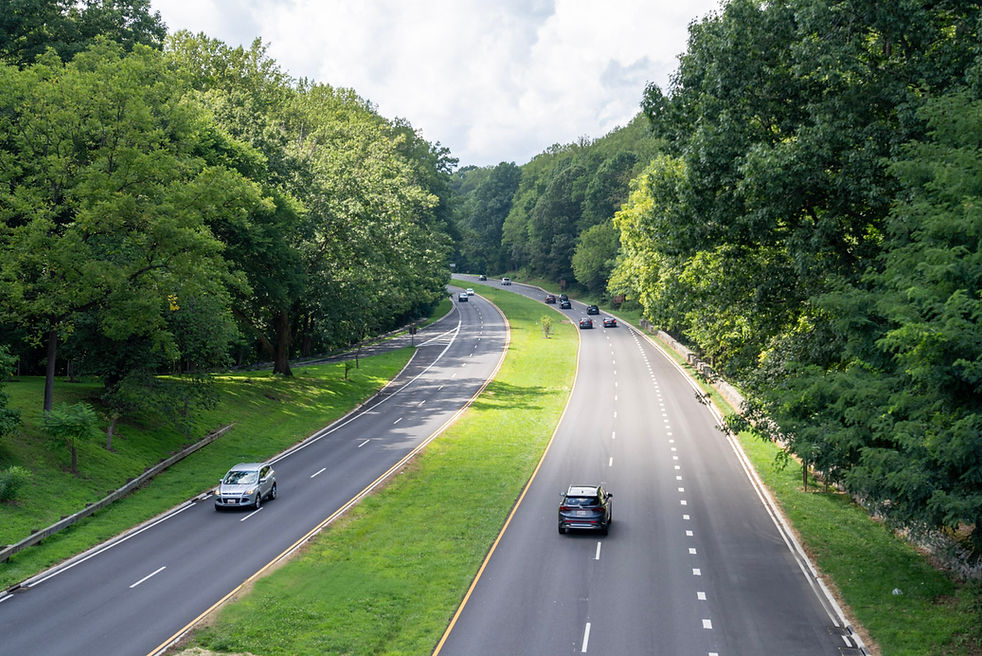
George Washington Memorial Parkway - North Parkway Rehabilitation
Project Overview
This project delivered the reconstruction of approximately 7.6 miles of the northern section of the GWMP between Spout Run and the I-495/Capital Beltway in Fairfax and Arlington Counties, Virginia. This project improved the driving experience, safety, and water drainage while retaining and enhancing the historic beauty and culture of the parkway. This rehabilitation included replacing the asphalt pavement, curbs, redesigning portions of the Route 123 interchange, repairing stormwater management systems, replacing and updating drainage inlets and culverts, lengthening entrance and exit lanes at some interchanges to improve traffic safety, rehabilitating two historic overlooks, reconstructing stone walls and improving roadside barriers, performing abutment repairs, pier repairs, bearing replacements and painting eleven bridges alongside the 7 mile corridor of GW Parkway North.
This project aimed to preserve the historical character of the parkway while enhancing safety, traffic flow, and overall roadway conditions for the 75,000 daily commuters who relied on this vital corridor. Fort Myer played a key role in this extensive infrastructure project by executing roadway and ramp reconstruction efforts, addressing long-term wear, and ensuring that the improvements met modern transportation standards. The work involved careful planning and coordination to maintain access and minimize disruption while revitalizing a significant piece of the region’s transportation network. One of the most complex aspects of the project was meeting traffic-maintenance needs. Our team successfully kept the flow of traffic moving throughout the construction process and protected crews while they worked.
During the asphalt overlay, advanced construction technology was utilized on our pavers and rollers that increased the quality and workmanship of the finished product. The data from the technology connected to a satellite and recorded in real time the asphalt's surface temperature, level of compaction, and location. This allowed us to ensure each section of the roadway was constructed to the highest standards, decreasing the likelihood of potholes that had plagued the parkway for decades. As part of the contractual scope of work, electric and intelligent transportation systems (ITS) infrastructure was constructed for future use by the National Park Service (NPS). The electrical and utility work also allowed NPS to collect data to help planners understand the growing needs of the roadway. The infrastructure could also evolve to track driving behavior to improve innovative driving features and parkway safety in future years.
Project Impact
Our work delivered 225,000 SY of full-depth pavement rehabilitation, 110,000 tons of asphalt construction, 800 storm-drain structure rehabilitation and replacement, 89 culvert and outfall improvements, 8 ramp and interchange upgrades, 10 bridges repaired in place, 15,000 LF of roadside barrier and 160,000 LF of curb improvements, 15,000 stone wall reconstruction, 16 historic overlook improvements, and 39,000 LF of electric and intelligent transportation systems infrastructure to support future NPS operations.
These outcomes demonstrate that the project delivered a corridor-wide infrastructure renewal rather than a limited maintenance repair. The rehabilitation improved ride quality, roadway reliability, drainage performance, bridge condition, traffic safety, and overall user experience while preserving the parkway’s historic and scenic character. Full-depth reclamation with cement reused existing roadway materials, strengthened the pavement foundation, improved grade control, and supported a smoother and longer-lasting roadway surface. Real-time asphalt paving and compaction technology helped improve workmanship by monitoring surface temperature, compaction, and placement location during construction. The use of ultra-high-performance concrete on bridge deck overlays further advanced long-term durability, providing a high-strength material solution with an anticipated service life substantially longer than conventional bridge deck concrete. Collectively, these measurable results show that the project improved mobility, safety, resilience, environmental stewardship, and regional connectivity for both daily commuters and park visitors.
Before Construction Photos


After Construction Photos


During Construction Photos


